Rules, Grants or Services? Three Ways to Shape a Response
Compare rules, grants, and public services by the actions they require, so you can match a policy tool to the obstacle and identify who must act.

Rules, grants, or services: which policy tool fits the problem you need to address? Start by naming the change you want and the actor who can make it, rather than choosing the tool that sounds most familiar. A rule addresses conduct, a grant supplies resources, and a service arranges for an activity to be provided.
Use that distinction to trace the proposed action from the obstacle to the people or organizations expected to respond. If the connection is unclear, refine the problem statement before settling on an instrument.
Define the change
Describe the desired condition without naming a policy tool. “Improve access” is too broad to guide a choice. A more useful statement might say that residents can reach an appointment, businesses stop a specified harmful practice, or eligible people can get help completing an application.
Next, describe the obstacle in plain terms. Is an actor choosing conduct that causes harm? Is a willing actor unable to act because resources are missing? Or is an activity people need simply unavailable? Several obstacles may exist at once, but distinguish them before deciding whether one tool can address them all.
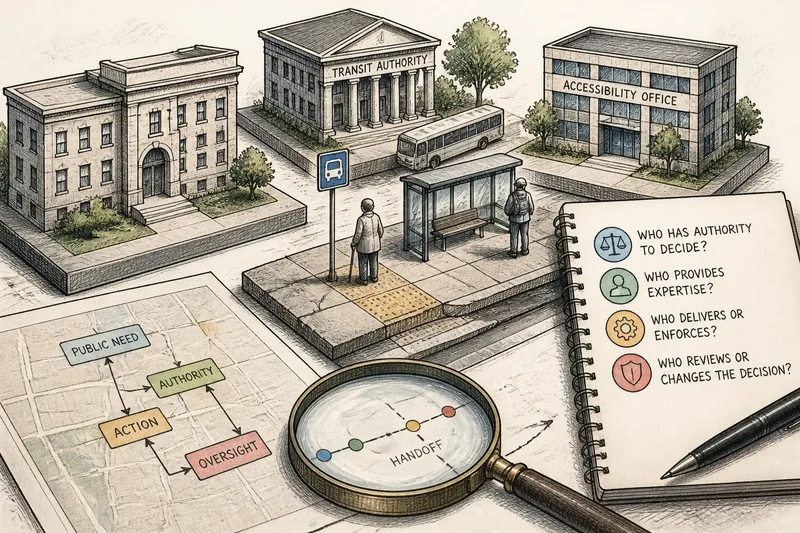
Name whose actions or circumstances matter. A rule addresses people or organizations subject to a requirement. A grant gives eligible recipients resources to act. A public service assigns an organization the work of delivering an activity or benefit. If the intended actor is unclear, the tool choice is premature.
Match the mechanism
A rule sets an obligation, restriction, or standard. It fits when an authority can specify conduct and that conduct connects to the problem. A rule does not, by itself, supply the staff, equipment, or access needed to meet the requirement.
A grant transfers resources to an eligible recipient for an approved purpose. It fits when another organization or person is positioned to act but lacks some of the means. The response still depends on a recipient being able and willing to carry out the work.
A service has a public agency or its provider deliver an activity or benefit to people. It fits when the missing element is the service itself, or when the public body needs to arrange access and delivery rather than simply require or fund another actor. Delivery may use public staff or a contracted provider; either way, the policy choice is to organize provision as part of the public response.
Use this comparison to identify what each tool asks its target to do:
- Rule: If the obstacle is conduct that a clear requirement could address, then consider a rule; if the conduct or responsible actor cannot be specified, clarify the problem or consider another tool.
- Grant: If an eligible recipient can act but lacks resources, then consider a grant; if no capable recipient is available, consider building capacity or arranging provision another way.
- Service: If people need an activity delivered and a public body can organize access, then consider a service; if another capable provider already exists, compare direct provision with support for that provider.
- Reach: If the tool reaches the people or organizations connected to the obstacle, then keep it in consideration; if it misses them, change the target or instrument.
- Capacity: If the intended actor has the authority and ability to take the requested action, then assess the tool’s other tradeoffs; if not, address the capacity gap before relying on that actor.
- Remaining barrier: If one tool leaves a distinct obstacle untouched, then consider a second instrument with a separate target and purpose; if it repeats the same request, revise the proposal instead.
These tools are not rankings of strength. A rule is not automatically more decisive than a grant, and a service is not automatically more responsive. Fit depends on whether the requested action reaches the obstacle.
Map the actors
Before settling on an instrument, list the people or organizations whose actions are necessary, what authority or capacity each has, and what they would need to do. Check whether the proposed tool reaches those actors directly or relies on a chain of other decisions.
For a rule, ask whether the relevant actor can be identified and whether the requirement can be stated clearly. For a grant, name plausible recipients and consider whether they can turn resources into the intended action. For a service, identify who will provide it and how people who need it can gain access. These are early design questions, not substitutes for later decisions about oversight and delivery.
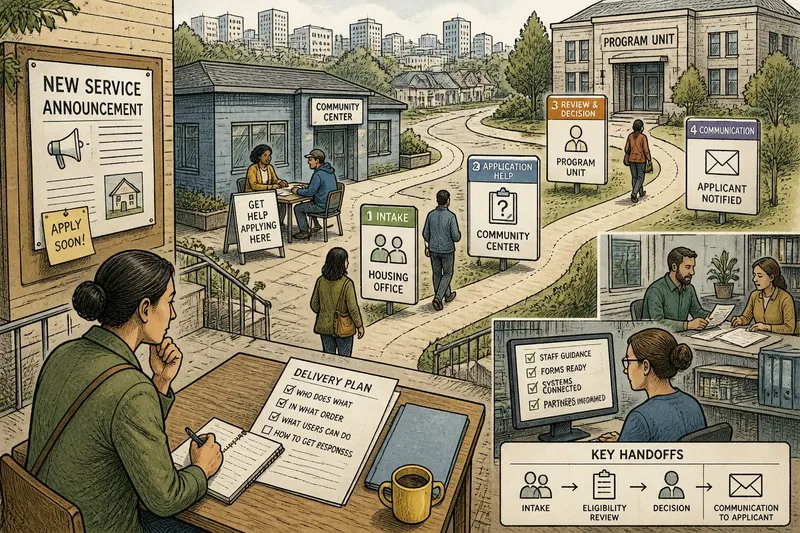
Say a town wants residents to understand notices about heating assistance. Imagine the town begins with residents who receive notices but cannot get explanations, and the town has no help service in place. It identifies the residents as the people needing support, asks a public office to explain the notices, and arranges a staffed help service; the expected observable result is that residents can ask questions and receive explanations through that service. A rule aimed at landlords would address a different actor, while a grant would depend on an organization being able to provide the help. This invented situation illustrates the mechanism choice, not a promise that one response will suit every town.
Compare the tradeoffs
Once the mechanism matches the obstacle, compare which decisions each tool leaves to others. A rule can set a common floor but still requires choices about checking compliance and handling exceptions. A grant can let recipients adapt work to local conditions but depends on who applies, qualifies, and can deliver. A service gives the public body a direct role in provision but requires it to organize the people and operations that make access possible.
Ask how much variation the problem can tolerate. If a consistent minimum matters, a rule may fit better than an open-ended grant. If conditions differ among communities and local organizations understand what is feasible, a grant may leave useful room for adaptation. If people need an activity delivered in an accessible way, a service may be more direct. Investigate these considerations; none settles the choice on its own.
Consider who might not be reached. A grant depends on an eligible recipient taking part; a service depends on people being able to find and use it; a rule depends on the conduct it covers and the response to noncompliance. Write down who might be missed and why. That can reveal a mismatch hidden by an appealing tool label.
When do tools combine?
Can a policy use more than one tool?
Yes, when each instrument addresses a distinct part of the problem. A grant might support an organization that provides a service, while a separate rule sets a standard for conduct; state what each tool asks its target to do.
When is a grant a poor fit?
A grant is a poor fit when the intended recipient cannot perform the needed action or when the obstacle is not a lack of resources. Funding alone does not create a capable provider or make an unavailable service accessible.
When should an agency provide a service directly?
Consider direct provision when the missing activity is itself the problem and a public body can arrange access for the people who need it. Compare that choice with funding another provider, especially if existing organizations have relevant capacity or access may differ by location.
What if no tool fits neatly?
Return to the problem statement and separate obstacles that require different actions. A combined response may fit, but each part should have a clear target and mechanism rather than being added just to make a proposal seem comprehensive.
Record the choice
Write the decision in a few plain sentences. State the condition to change, the actor who must act, the mechanism the tool uses, and why it fits better than the alternatives. Add the main limitation that remains so colleagues can challenge the reasoning rather than debate labels.
Before treating the choice as settled, check the authority and program requirements that apply. Rules, grants, and services involve different legal and administrative constraints. If the answer depends on a governing label, agency instructions, or local requirements, confirm those details with the responsible public office or a qualified professional.
A sound comparison of rules, grants, and services connects the proposed action to the obstacle and to an actor who can respond. If that connection is missing, revise the problem statement before adding another instrument. Keep the remaining limitation beside the decision: it tells the next reviewer what the chosen tool does not address.